
A $50,000 investment can buy many things. But in 1995, that amount could have purchased about 1% of Amazon, a company that was then only an online bookstore and still difficult for many investors to understand.
At the time, the internet itself was unfamiliar to many people. According to Amazon founder Jeff Bezos, some potential investors asked him a basic but fair question: “What’s the internet?”
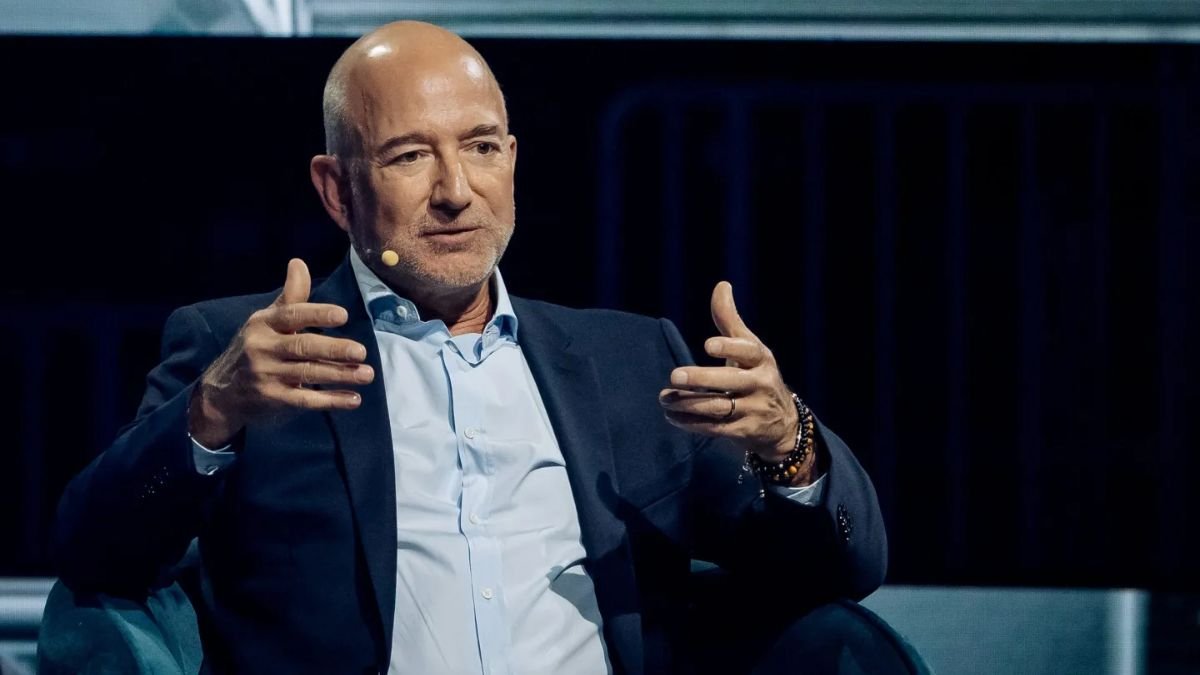
Bezos later shared the story during an interview at The New York Times DealBook Summit in 2024, where he reflected on the difficult early days of raising money for Amazon.
Bezos Tried to Raise $1 Million for Amazon
In Amazon’s earliest stage, Bezos was trying to raise $1 million by selling 20% of the company.
That placed Amazon’s valuation at around $5 million.
The offer meant investors could put in roughly $50,000 in exchange for about 1% ownership in the company.
Today, that sounds like one of the greatest investment opportunities in modern business history. But in 1995, the idea looked extremely risky.
Sixty Meetings and Forty Rejections
Bezos said he had to meet with about 60 potential investors to raise Amazon’s first seed funding.
Out of those meetings, only around 20 to 22 investors eventually agreed to invest.
About 40 people rejected the opportunity.
Bezos described the process as incredibly difficult, calling it the hardest thing he had ever done.
The rejections were not quick or casual. Bezos said he often went through multiple conversations and follow-up meetings before investors finally said no.
Why Investors Were Skeptical
The skepticism was understandable.
Amazon was an online bookstore at a time when online shopping was still a strange and unfamiliar concept. Many people had not yet grasped how the internet could change commerce.
Bezos did not hide the risks either. He openly told potential investors that there was a 70% chance they could lose their money.
He later admitted that even that warning may have been too optimistic. Looking back, Bezos said the real odds of success may have been worse than he suggested at the time.
A Hypothetical 1% Stake Today
Amazon eventually became one of the largest companies in the world.
With a market value of about $2.5 trillion, a hypothetical 1% stake in Amazon would now be worth roughly $25 billion.
That calculation assumes the investor kept the full 1% ownership stake and was not diluted by later fundraising rounds or share issuances.
In reality, early investors would likely have seen their ownership percentage reduced over time. Still, the example shows how dramatically Amazon grew from its uncertain beginning.
The Rejections Were Hard-Earned
Bezos said the 40 rejections were not easy to accept because they required serious effort.
He worked hard to convince people to write a $50,000 check. Many investors needed repeated explanations, meetings and reassurance before ultimately deciding not to invest.
That part of the Amazon story is often forgotten. Before Amazon became known for Prime deliveries, warehouses, cloud computing and global retail dominance, it was simply a risky startup built around a technology many people barely understood.
Bezos Continues to Bet on Future Technologies
Bezos has not lost interest in ambitious, future-focused technology.
During the same DealBook Summit conversation, he said robotics is one of the areas he is watching closely.
Bezos said he is investing in several robotics companies and believes strongly in the field.
He also said there has never been a more extraordinary time to be alive, expressing optimism about the opportunities created by emerging technologies.
Robotics and Automation Move Into Real Business
Bezos’s interest in robotics reflects a broader trend across industries.
Automation is no longer just a science-fiction idea. It is becoming part of everyday business operations, especially in sectors facing staffing shortages, high turnover and rising costs.
One example is Miso Robotics, a company developing automation for restaurant kitchens.
Its Flippy Fry Station works alongside restaurant employees and handles fry-cooking tasks. The technology has been used by operators including White Castle.
The company says Flippy has prepared more than 5 million baskets of food across more than 200,000 hours of real-world operation.
Why Automation Appeals to Businesses
For restaurants, automation can help address labour shortages, high employee turnover and tight profit margins.
The goal is not always to replace workers. In many cases, automation helps kitchens operate more efficiently during busy periods, especially when demand suddenly increases.
As artificial intelligence and robotics become more practical, companies are looking for ways to apply them in real-world environments.
The Lesson From Amazon’s Early Fundraising
The investors who rejected Bezos were not necessarily foolish.
They were being asked to invest in an unfamiliar company using unfamiliar technology at a time when the internet’s future was far from guaranteed.
However, the story shows that major opportunities often appear risky, confusing or unrealistic in their earliest stages.
In 1995, investors were asking what the internet was. Today, investors ask similar questions about artificial intelligence, robotics, automation, spatial computing and other emerging technologies.
Bezos did not know for certain that Amazon would survive. In fact, he warned people it probably would not. But he kept taking meetings, kept hearing rejection and kept building anyway.
That persistence turned a $50,000 investment question into a hypothetical $25 billion missed opportunity.
Building Wealth Beyond One Market
The Amazon story also highlights a larger investing lesson: long-term wealth is rarely built by relying on one idea, one company or one market trend.
Markets shift. Sectors rise and fall. Economic cycles change. Because of that, many investors look for ways to diversify beyond traditional stocks.
Some platforms now offer access to real estate, private credit, precious metals, farmland, alternative assets and self-directed retirement accounts.
Diversification can help manage risk, create income opportunities and reduce dependence on the performance of one company or sector.
Arrived
Arrived, backed by Jeff Bezos, makes real estate investing more accessible by allowing investors to buy fractional shares of single-family rental homes and vacation properties.
Investors can start with as little as $100, giving everyday people a way to gain exposure to rental income and long-term real estate growth without directly managing properties.
BluSky AI
BluSky AI focuses on the infrastructure needed to support artificial intelligence.
As AI adoption increases, demand is rising for data centers, power and computing capacity. BluSky AI is developing modular AI data centers designed to support advanced AI workloads and reduce deployment timelines compared with traditional facilities.
ARK7
ARK7 gives investors access to fractional shares of residential rental properties.
The platform allows people to invest in real estate without taking on the responsibilities of property ownership or management. It offers another way to diversify beyond stocks and bonds while potentially earning rental income.
Immersed
Immersed is building technology for the future of work through spatial computing.
Its AR and VR productivity platform allows users to work across multiple virtual screens. The company has grown to more than 1.5 million users worldwide and is also developing Visor, a lightweight headset designed for professional productivity.
Miso Robotics
Miso Robotics develops AI-powered kitchen automation for restaurants.
Its technology is designed to help food service operators improve efficiency, reduce pressure on staff and streamline operations. As AI expands into physical work environments, Miso Robotics is positioning itself at the intersection of automation, robotics and food service.
Vinovest
Vinovest offers access to investment-grade fine wine and rare whiskey.
These assets have historically moved differently from the stock market, making them attractive to some investors looking for alternative diversification. Vinovest manages sourcing, authentication, storage and insurance for portfolios starting at $5,000.
FarmTogether
FarmTogether gives accredited investors access to high-quality U.S. farmland.
Farmland has historically held value through market volatility and has often performed differently from stocks and bonds. FarmTogether offers fully managed farmland investment opportunities starting at $15,000.
EquityMultiple
EquityMultiple provides accredited investors with access to vetted commercial real estate deals.
The platform says only about 5% of opportunities pass its due diligence process. Investments start at $5,000, giving investors a way to explore commercial real estate beyond public markets.
Fundrise
Fundrise offers access to private real estate and private credit strategies.
Its professionally managed portfolios are designed for investors seeking passive income, long-term growth and diversification beyond a stock-heavy portfolio.
American Hartford Gold
American Hartford Gold helps clients buy physical gold and silver coins and bars.
The company offers direct delivery, gold and silver IRAs, IRA rollovers and precious metals for self-directed retirement accounts. Investors often use precious metals as a way to diversify and hedge against inflation or market volatility.
Mode Mobile
Mode Mobile is building a model that lets users earn money from everyday smartphone activity.
Instead of keeping all advertising revenue, the platform shares a portion with users who engage with content, play games and use apps. The company has been named one of Deloitte’s fastest-growing software companies in North America and is scaling a model based on monetizing daily phone usage.
Jeff Bezos’s early Amazon fundraising story shows how difficult it can be to recognize breakthrough opportunities before they become obvious. In 1995, Bezos offered investors roughly 1% of Amazon for $50,000, but around 40 of 60 potential investors said no.
At the time, Amazon was a risky online bookstore, and many people still did not fully understand the internet. Today, a hypothetical 1% stake would be worth about $25 billion, assuming no dilution. The lesson is not that every risky startup will become Amazon, but that innovation often looks uncertain before it becomes mainstream.
Bezos’s persistence, willingness to face rejection and belief in future technology remain central to one of the most remarkable business stories of the modern era.