
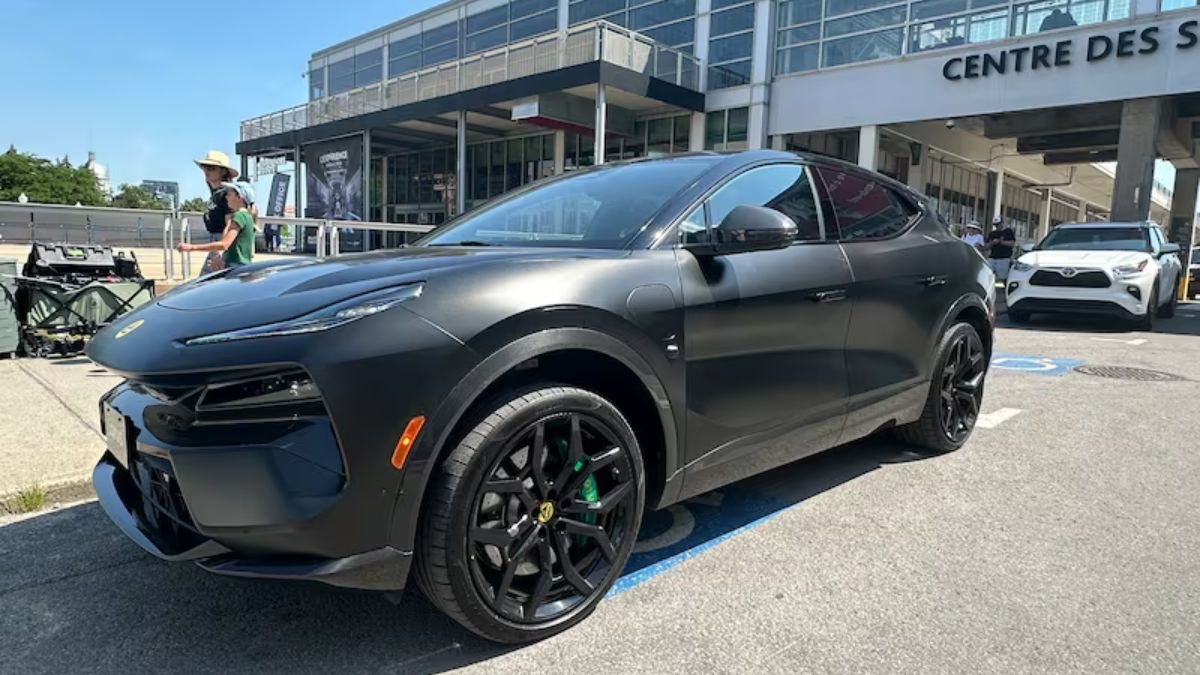
Canada’s electric vehicle market now has a new entrant, giving luxury EV buyers more choice.
Lotus, owned by China’s Geely Group, has shipped its first Eletre electric SUVs to Canada under a Canada-China agreement signed in January. The Eletre is the first EV that is both Chinese-owned and Chinese-built to be offered for sale in Canada.
Lotus Eletre Arrives in Canada
The Lotus Eletre, built in Wuhan, China, is a premium electric SUV with a starting price of $119,000.
A fully equipped version sells for about $159,000.
According to Max Trantini, CEO of Lotus Cars Americas, interest in the vehicle has already been strong.
The SUV can travel more than 600 kilometres on a single charge and can charge from 20% to 80% in under 20 minutes.
First Shipment Already Delivered
Trantini said the first shipment of nearly 20 vehicles has arrived in Canada.
More imports are expected as the Eletre reaches dealerships and begins appearing on Canadian roads.
He said Canadian customers showed strong interest even before seeing the car in person, and Lotus expects demand to grow as more people experience it at dealerships.
Canada-China EV Agreement
The Eletre is the first Chinese-made EV imported into Canada after Prime Minister Mark Carney reached an agreement with Chinese President Xi Jinping in January.
The deal allows up to 49,000 Chinese EVs to enter Canada each year at a 6.1% tariff rate.
That replaced the 100% tariff Canada imposed on Chinese-made EVs in 2024.
In return, China agreed to drop duties on agricultural products.
Lotus Had Delayed Canadian Launch
Trantini said Lotus had originally planned to launch the Eletre in Canada after introducing it in Europe three years ago.
However, the company paused imports after the 100% tariff was introduced in 2024.
He said Lotus had already developed plans for both the U.S. and Canadian markets and believes the Eletre is well suited for Canada.
Chinese EV Imports Since March
Data from Global Affairs Canada shows 2,910 EVs from China have entered Canada since March 1.
However, the agency could not say where the vehicles are located or which companies imported them.
No new Chinese EVs have arrived in Canada since the end of May.
More Familiar Brands Expected First
Tim Dimopoulos, managing director and publisher of Automotive News Canada, said many early Chinese-built EV imports will likely come from familiar brands already operating in Canada.
These include companies such as Lotus, Tesla and Volvo, which already have dealer networks in the country.
He said those brands are expected to take up a large share of the 49,000-unit import allowance, but new entrants such as BYD may also begin entering the Canadian market.
Lotus Plans Dealer Expansion
Lotus currently has six dealerships in Canada.
Company officials say they are exploring ways to expand now that the Eletre is available for orders.
Trantini said the dealer network was previously small because Lotus mainly sold sports cars. With the arrival of a luxury SUV, Lotus is speaking with current dealers about expanding and is also receiving daily interest from investors.
Polestar, BYD and Chery Could Follow
Transport Canada data shows Polestar, also owned by Geely Group, is listed in the department’s Appendix G pre-clearance program.
This registry allows foreign automakers to import new vehicles that comply with Canadian Motor Vehicle Safety Standards.
Polestar is registered for passenger vehicles made in Chengdu and Taizhou, China, as well as vehicles produced in the United States and South Korea.
Chinese automakers BYD and Chery are also expected to enter Canada in the coming months.
BYD already has Appendix G approval for an unspecified passenger vehicle made in Shenzhen City and Xi’An, China.
Luxury Models Likely to Arrive First
Dimopoulos said Chinese automakers will likely begin with higher-end luxury models.
These vehicles offer stronger profit margins and appeal to a smaller but more profitable buyer segment.
He said companies entering Canada may need to make money early to support investments in dealerships, partnerships or Canadian offices.
Ottawa Wants Cheaper Chinese EVs Later
The federal government has said that by 2030, it wants half of Chinese EVs imported into Canada to cost less than $35,000.
Experts believe that as more Chinese EVs arrive, especially lower-cost models, prices across the electric vehicle market could come down.
Dimopoulos said the first pressure in the marketplace will likely be lower prices from competing manufacturers.
Canada’s Current EV Market
According to Transport Canada, there are at least 726,126 light-duty battery electric vehicles on Canadian roads.
That represents 2.7% of the market.
There are also 304,823 light-duty plug-in hybrid vehicles, representing 1.1% of the market.
Security and Privacy Concerns
Chinese-made EVs have also raised concerns among intelligence and cybersecurity experts.
Some experts describe modern EVs as “smartphones on wheels” because they collect large amounts of data.
Concerns focus on Chinese laws that can require companies, especially those with some state ownership, to provide data to the government if requested.
Former Security Advisor Warns of Data Risks
Jody Thomas, Canada’s former national security and intelligence advisor to former prime minister Justin Trudeau, said Chinese law gives the state access to data collected by these vehicles.
She said that does not mean China will access the data, but it means it could if it chose to.
Thomas described the risk as plausible.
She said vehicles can collect information such as routes, phone contacts, driving patterns, phone conversations and camera recordings.
At a basic level, she said, this is a privacy issue. But when large amounts of data are combined, it could become useful for espionage.
Buyers Urged to Consider Their Risk
Thomas said consumers should think about these risks before buying a Chinese-made EV.
She said people in sensitive jobs may want to be more cautious, especially those working in the military, sensitive industries, federal or provincial government roles, or other security-related sectors.
She also suggested reducing risk by avoiding connecting work devices to the vehicle.
Some experts have even suggested banning Chinese-made EVs from sensitive sites such as military bases and certain government facilities.
Lotus Says Vehicles Meet Canadian Rules
Asked about security concerns, Trantini said Lotus vehicles comply with all Canadian government rules and regulations.
He said the company disclosed information about its software and hardware to the government and passed required examinations.
Trantini said that as long as Lotus remains compliant, he does not believe the company has anything to fear.
Ottawa Watching Data Transmission Risks
Public Safety Minister Gary Anandasangaree told a parliamentary committee that Ottawa must ensure vehicles in Canada cannot transmit information back to other countries, including China.
Canada has also said Chinese automakers entering the Canadian market should “build where they sell.”
Officials, including Industry Minister Melanie Joly, have said Chinese automakers must partner with Canadian companies not only to sell vehicles but also to build them.
Experts say Canada could potentially negotiate rules preventing Chinese companies that build EVs domestically from collecting data gathered in Canada.
Trantini said Lotus will comply with any future government rules related to data and security.
Lotus’s arrival in Canada with the Chinese-built Eletre marks a major development in the country’s EV market. The luxury SUV is entering under a new Canada-China agreement that lowers tariffs and allows more Chinese EV imports.
While the deal may increase consumer choice and eventually put pressure on EV prices, it also raises questions about data privacy, cybersecurity and national security.
As more Chinese-owned or Chinese-built EVs prepare to enter Canada, regulators, automakers and consumers will need to balance affordability, innovation and security concerns.