
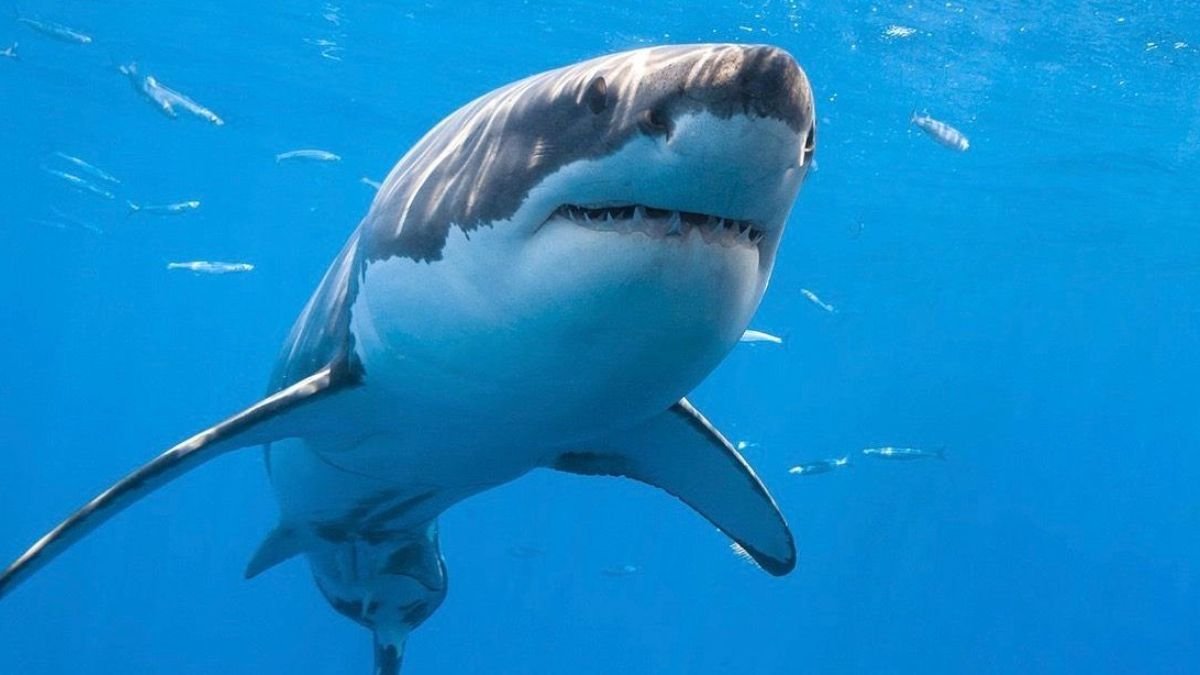
A juvenile great white shark named Bella has been tracked swimming through the waters of Atlantic Canada, offering another reminder that white sharks are now regular seasonal visitors in the region.
Bella is about 10 feet long and weighs at least 730 pounds.
Bella Tracked Near Magdalen Islands
According to the Florida-based shark tracking organization OCEARCH, Bella was detected on July 4 moving through the Gulf of the St. Lawrence near Quebec’s Magdalen Islands.
She had earlier appeared off the eastern coast of Prince Edward Island on June 29.
The St. Lawrence Shark Observatory said that sighting made Bella the first documented great white shark in the Gulf of the St. Lawrence for the 2026 season.
Bella’s Long Journey
Bella was first tagged last summer in Mahone Bay, Nova Scotia.
After that, she travelled south for the winter, reaching as far as the Gulf of Mexico.
During the past month, she moved north from waters near Cape Cod, passed through the Gulf of Maine, travelled around Nova Scotia’s south shore, moved north of Prince Edward Island, and then entered the Gulf of the St. Lawrence.
Researchers Say Her Presence Is Not Unusual
Although Bella’s movements may sound alarming, researchers say her presence in Canadian waters is normal for the species.
The St. Lawrence Shark Observatory said her detection should not be viewed as an unusual event.
Instead, it shows that white sharks have become regular seasonal visitors to Atlantic Canada.
OCEARCH data scientist John Tyminski said white sharks have used Atlantic Canadian waters for thousands of years because the region is part of their natural range.
White Shark Populations Are Recovering
Tyminski explained that white shark numbers declined sharply from the 1960s to the early 1990s because of unregulated fishing.
Protective measures later helped reduce shark harvesting.
At the same time, seal populations in Atlantic Canada have increased again, giving white sharks access to one of their key food sources.
Tyminski said the increase in sightings reflects signs of white shark recovery and a healthier ocean ecosystem.
He added that apex predators such as white sharks play an important role in keeping marine environments balanced.
Why More Sharks Are Being Seen
Experts say several factors are contributing to more white shark sightings.
These include:
- Recovering shark populations
- Larger seal populations
- Warmer ocean temperatures
- Better satellite tracking technology
- More photos and videos shared by the public
Tyminski said modern tracking tools and citizen footage make it easier to notice sharks that may have always been present.
How Common Are Great Whites in Atlantic Canada?
Researchers still do not have enough long-term data to accurately estimate how many great white sharks visit Atlantic Canada.
Nigel Hussey, an associate professor of biology at the University of Windsor, said accurate population estimates would require several more years of research.
However, Hussey said about 70 to 90 tagged white sharks pass through Mahone Bay between June and November each year.
He estimated there are likely more than 2,000 white sharks in Atlantic Canadian waters annually.
Hussey is also co-director of the Tancook Islands Marine Field Station, which tagged Bella in 2025.
Sharks in the Gulf of St. Lawrence
Hussey said white sharks are definitely present in the Gulf of St. Lawrence and have been tracked throughout the Gulf and near the entrance to the St. Lawrence River.
However, he said he is not aware of any confirmed records of white sharks inside the river itself.
According to satellite data Hussey reviewed, Bella has remained near the Magdalen Islands throughout the week.
Safety Advice for Swimmers
Hussey said people should not panic because white sharks do not seek out humans as food.
However, he emphasized that white sharks are large predators, so people should be aware of their presence.
He recommended basic safety precautions, including:
- Avoid swimming in murky water
- Do not swim at dawn or dusk
- Stay out of areas where seals are present
- Use common sense in coastal waters
Shark Attacks Are Rare in Canada
According to the St. Lawrence Shark Observatory’s Canadian Shark Attack Registry, shark attacks in Canada are extremely rare.
The registry lists only 15 confirmed shark attacks over the past 330 years.
It also records just one confirmed shark-related human death.
That fatal case happened in 1953, when a white shark rammed a fishing boat near Fourchu, Nova Scotia, and a fisherman drowned.
Other White Shark Sightings in Canada
OCEARCH says 88% of white sharks tagged in the southeastern United States have travelled to Atlantic Canada.
Several notable sightings have been reported in recent years.
In October, OCEARCH recorded Contender, the largest male great white shark ever tagged in the western North Atlantic, in the Gulf of the St. Lawrence.
Contender weighs 1,653 pounds.
He was last detected in April off North Carolina, but satellite data showed he travelled as far north as the Jacques Cartier Strait off Quebec’s north shore last September.
He also spent late October around Cape Breton, Nova Scotia.
Encounters in Nova Scotia and P.E.I.
Last summer, scuba divers encountered a great white shark near Hubbards, Nova Scotia.
Other sightings were reported near Halifax and off Cape Breton, where a great white bit a lobster fisherman’s boat.
On Oct. 31, a great white shark was found dead along Prince Edward Island’s North Shore.
Researchers were disappointed by the death, but they also said the shark’s presence near P.E.I. could be a hopeful sign for the Atlantic white shark population.
Great Whites Also Appear in Pacific Canada
White shark activity is not limited to Atlantic Canada.
In March, researchers tracking a great white shark named Kara recorded her off the coast of Vancouver Island.
They said Kara was the first of their tagged great white sharks officially documented that far north, but sharks appearing in Canadian Pacific waters are not considered unusual.
Bella’s journey through the Gulf of the St. Lawrence highlights the growing visibility of great white sharks in Canadian waters. Researchers say her presence is part of normal seasonal behaviour, supported by recovering shark populations, increased seal numbers, warmer waters and better tracking technology.
While white sharks are powerful predators, attacks in Canada remain extremely rare, and experts advise swimmers to stay aware rather than fearful.