
Canada has announced plans to buy up to 12 attack submarines from Germany after a competitive bidding process between Berlin and Seoul for the next generation of Royal Canadian Navy submarines.
Prime Minister Mark Carney’s office described the project as the largest defence procurement in Canadian history.
Germany Chosen as Preferred Supplier
On Monday, Ottawa selected Thyssenkrupp Marine Systems as the preferred supplier for the Canadian Patrol Submarine Project.
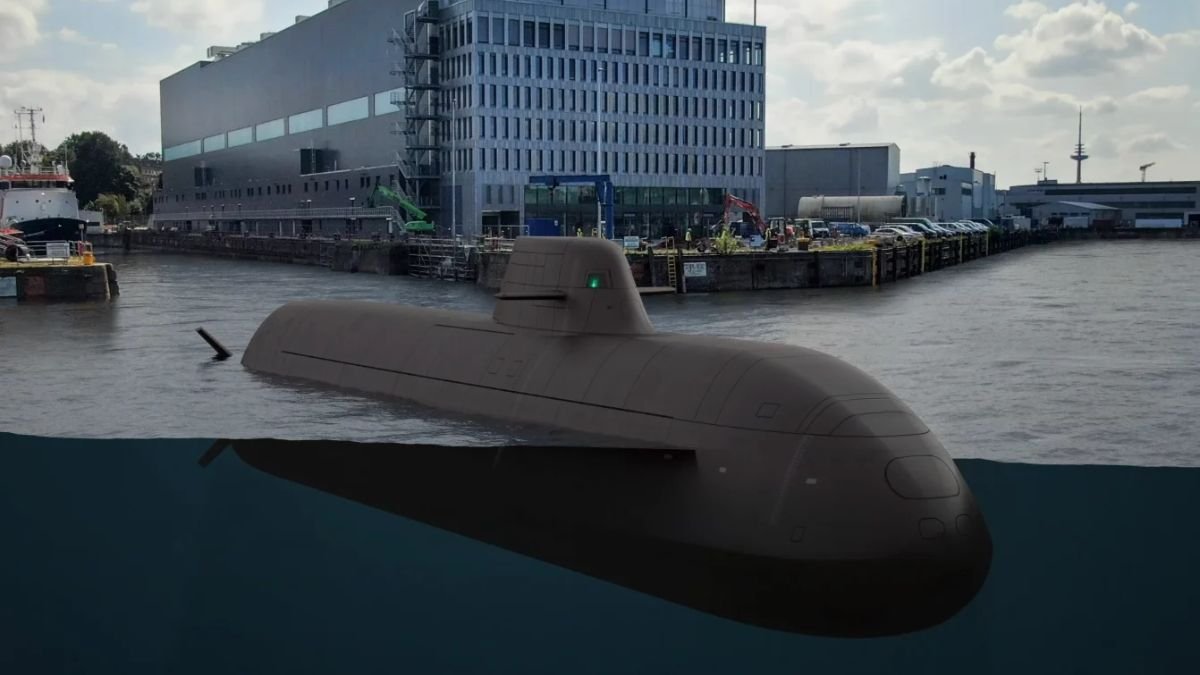
The German company offered the Type 212 CD submarine design.
Its bid beat South Korea’s Hanwha Ocean, which had proposed the KSS-III CPS submarine.
Both submarine classes represent advanced undersea combat technology and are expected to enter frontline service in their home countries in the coming years.
Canada Wants to Replace Aging Victoria-Class Fleet
The submarine modernization program began in 2024.
It aims to replace and expand Canada’s current fleet of four aging Victoria-class submarines, which were previously operated by the U.K. Royal Navy during the Cold War era.
According to Carney’s office, only one of those submarines is currently seaworthy.
The new project could deliver up to 12 submarines, tripling the size of Canada’s existing fleet.
Contract Expected by 2027
The Canadian government’s timeline says the final contract with TKMS should be completed by 2027.
The Royal Canadian Navy wants the first four Type 212 CD submarines ready for delivery by 2034.
However, Ottawa has said that if negotiations with TKMS do not succeed, Canada could still choose Hanwha Ocean’s proposal instead.
New Submarines to Face Wider Security Challenges
Canada expects the future patrol submarines to handle a broader range of missions as global security threats expand.
Carney’s office said the assumptions that shaped Canadian defence planning for decades are changing.
It also pointed to the Arctic, where climate change is causing the region to warm nearly three times faster than the global average.
The government warned that adversaries may try to exploit those changes, making it more important for Canada to defend itself and support its allies.
Arctic, NATO and Pacific Priorities
In addition to Canada’s traditional commitments to NATO, Ottawa is increasingly focused on the Arctic and the Western Pacific.
Carney’s office said choosing the Type 212 CD would improve Canada’s interoperability with the German and Norwegian navies, which are also set to operate the same submarine class.
Hanwha Ocean Responds to Decision
After the Canadian government selected the German bid, Hanwha Ocean said its proposal could not overcome what it described as the advantage created by the NATO alliance.
To strengthen its bid, the South Korean company had also offered armoured vehicle and artillery production that could have supported other areas of Canada’s defence industrial base.
Canada’s decision to select Germany’s Type 212 CD submarine design marks a major step in modernizing the Royal Canadian Navy.
The project could deliver up to 12 new submarines, replacing Canada’s aging Victoria-class fleet and strengthening the country’s ability to respond to threats in the Arctic, North Atlantic and Western Pacific. While TKMS is now the preferred supplier, final contract negotiations are still expected to continue until 2027.