Teen Accused of Killing Four Friends in Crash Asks Judge to Drop the Case
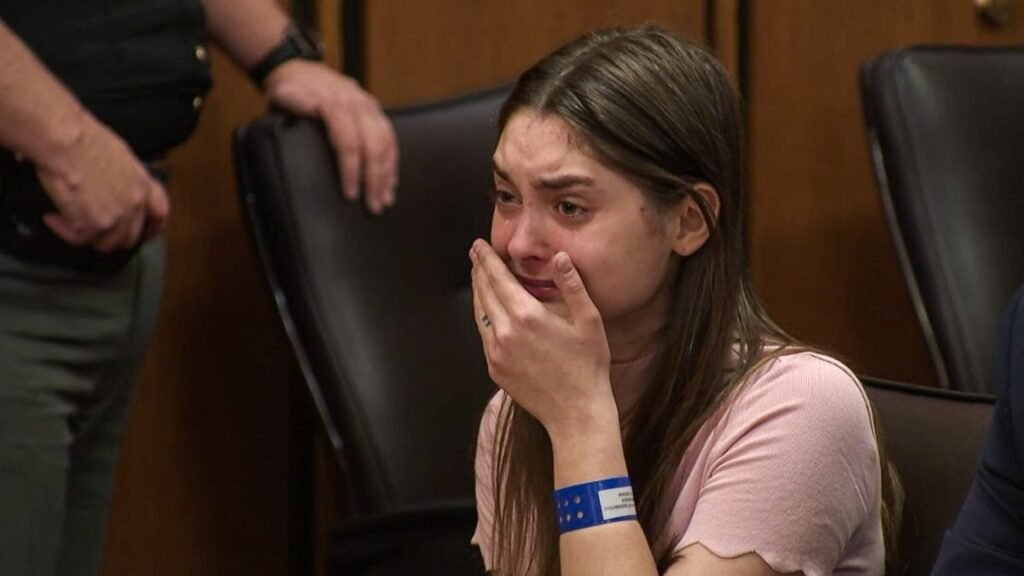
A 17-year-old girl charged in connection with a fiery California car crash that killed four of her friends has asked a judge to dismiss the case against her.
Elsa Laremont Stranczek was 16 years old when the Volkswagen Tiguan SUV she was driving left the roadway near Woodacre, California, and struck a tree last year. The vehicle subsequently caught fire.
Four teenage passengers died in the collision: Olive Koren, 14; Sienna Katz, 15; Josalynn “Josy” Osborn, 15; and Ada Kepley, 15.
Stranczek and another passenger, 14-year-old Marley Barclay, were the only survivors. Both suffered serious injuries.
Survivors Claimed Another Vehicle Caused the Crash
Stranczek and Barclay reportedly told investigators that an approaching vehicle had entered their lane, forcing the SUV off the road.
Authorities later rejected that explanation after finding no evidence that another vehicle was present or involved in the crash.
In October, prosecutors charged Stranczek with misdemeanor manslaughter. This type of charge generally applies when a person unintentionally causes someone’s death while committing a misdemeanor or another relatively minor unlawful act.
Prosecutors must also establish a direct connection between the alleged unlawful conduct and the deaths.
Families Divided Over Trial and Rehabilitation
Stranczek has requested that the charge be dismissed, while relatives of some victims have argued that she should face trial and accept responsibility for the crash.
Because she was a minor at the time, Stranczek could reportedly receive up to one year in juvenile detention if convicted.
However, other relatives have supported a more lenient outcome known as juvenile diversion. Diversion allows a young defendant to avoid traditional criminal proceedings by entering a rehabilitation, counselling or support programme.
Supporters of diversion have said they believe the victims would have wanted Stranczek to receive rehabilitation rather than detention.
Defence Raises Concerns About Missing Evidence
The competing arguments were heard in court this week as Stranczek appeared before the victims’ families.
All 43 seats in the courtroom gallery were occupied during Wednesday’s hearing, when the teenager renewed her request for dismissal.
Her defence lawyer, Charles Dresow, argued that the case should be dropped because of alleged problems with the California Highway Patrol investigation.
Dresow claimed CHP officers had discarded their written notes and failed to preserve an audio recording of their interview with Stranczek.
Officers Jonathan Briggs and Erik Carrillo told the court that their notes were thrown away after they completed the official investigation report.
The court also heard that the interviews had been conducted using a wireless microphone. However, the audio signal reportedly failed to reach the recording equipment inside the patrol vehicles.
Dresow argued that a preserved recording would have provided an exact account of what Stranczek said during questioning.
Judge Rejects Evidence Destruction Argument
The judge declined to dismiss the case on those grounds, finding insufficient evidence that officers had deliberately destroyed material or acted dishonestly.
The judge said the available information did not support a conclusion that the officers had acted in bad faith.
Olive Koren’s Grandparents Support Diversion
Olive Koren’s grandparents questioned whether CHP investigators had fully examined every possible explanation for the crash.
Her grandmother, Gail Koren, told the court that Olive would have wanted investigators to follow every available lead and examine all relevant evidence.
Despite those concerns, she supported allowing Stranczek to enter diversion, saying she believed that was the outcome Olive would have preferred.
Other Families Demand Accountability
Josy Osborn’s parents opposed diversion and called for Stranczek to face the consequences of her alleged actions.
Her father, Joseph Osborn, told the court that Stranczek needed to recognise the seriousness of what had happened. He said his family had lost the opportunity to create any more memories with their daughter.
He stressed that decisions had been made and that four young people had lost their lives as a result.
Sienna Katz’s mother, Peg Minicozzi, also argued against resolving the case through diversion.
She described her daughter’s death as the most painful and devastating experience of her life and said accountability was among the most important principles parents teach their children.
Minicozzi added that juvenile diversion is usually associated with less serious first-time offences. Given that four teenagers died, she argued that diversion without an admission or legal finding of guilt would not adequately reflect the severity of the tragedy.
What Happens Next?
Stranczek’s hearing is expected to continue on August 10.
The judge will consider whether the teenager should be accepted into a diversion programme. If diversion is denied, the misdemeanor manslaughter case is expected to proceed to trial.
The case has exposed deep divisions among the victims’ families over rehabilitation, punishment and accountability. While some relatives believe diversion would honour the wishes of the teenagers who died, others maintain that the loss of four lives requires a formal trial.
The court’s eventual decision will determine whether Stranczek enters a rehabilitation programme or faces prosecution in juvenile court.